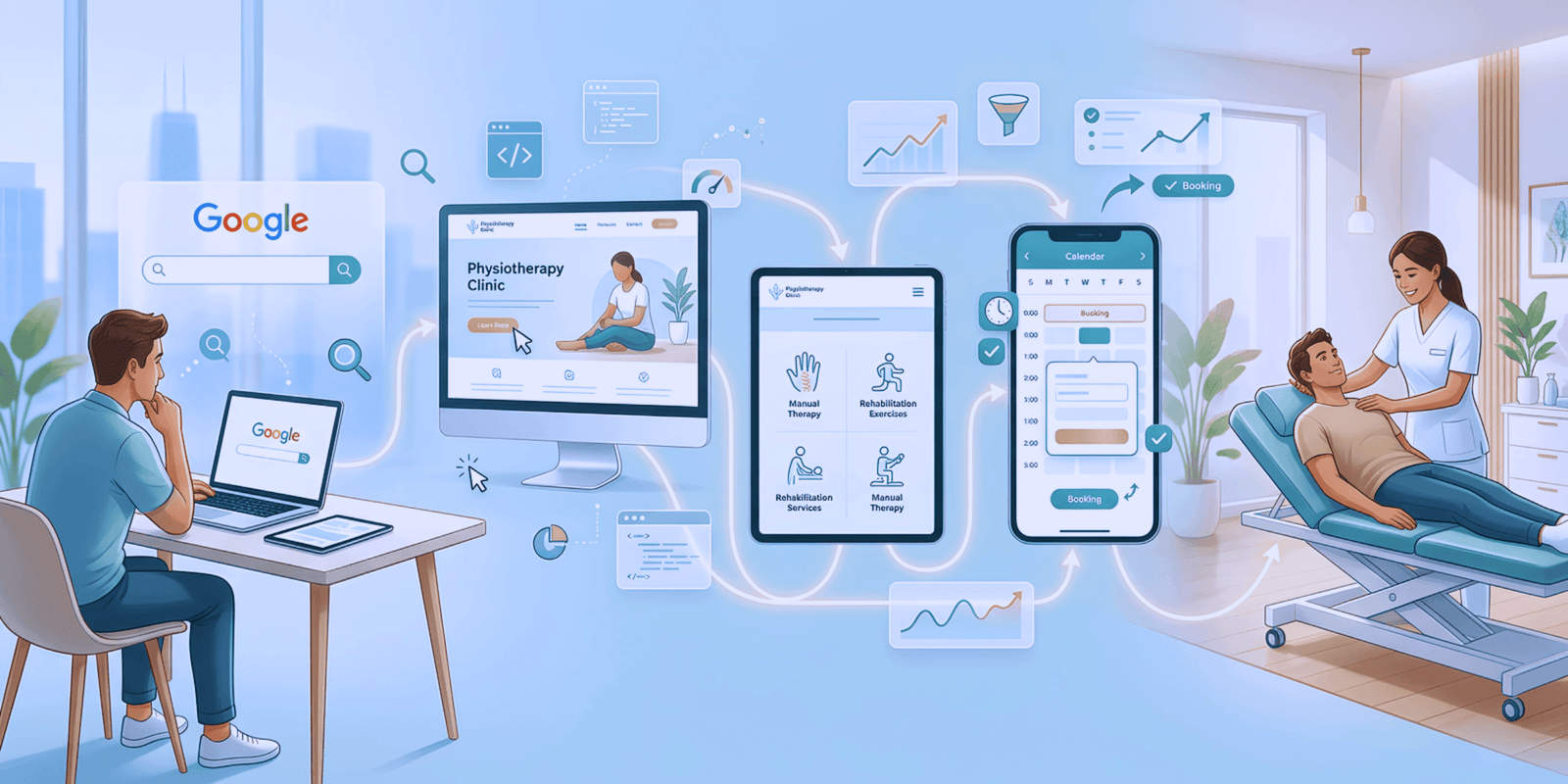
Multi-Location Clinic SEO: One Brand - Several Suburbs
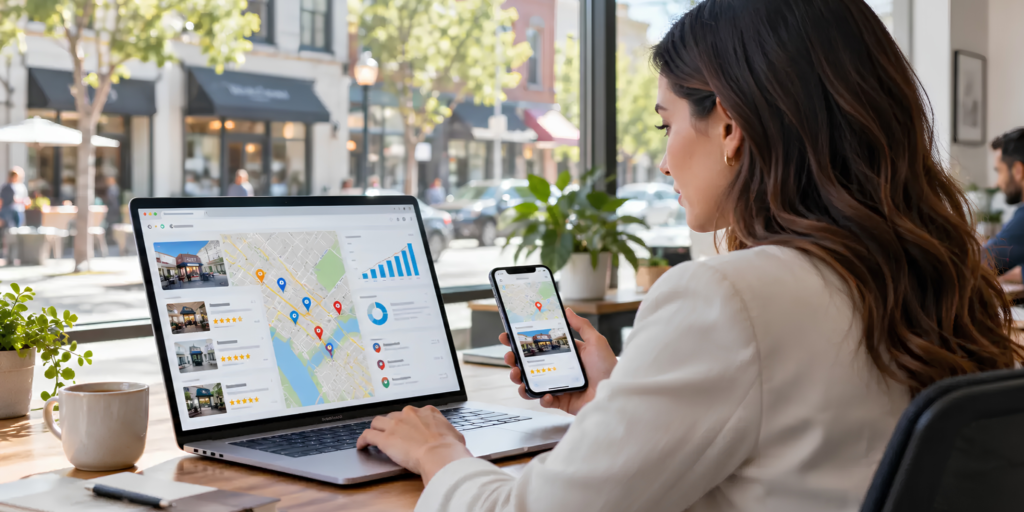
Opening a new clinic in another suburb is exciting, but it often brings a frustrating problem: your first clinic shows up at the top of Google, while your new clinic gets almost no bookings from online searches. When you run several locations on one website without a proper multi-location clinic SEO setup, your own clinics end up fighting against each other on Google. Patients also get confused about which clinic to pick.
Table of contents
- 1. Strategic information architecture & URL hierarchy
- 2. Landing page engineering: Eliminating duplicate content
- 3. Capturing surrounding suburbs without doorway page penalties
- 4. Multi-location Google Business Profile (GBP) optimization
- 5. Internal link matrix & Technical setup
- Ready to grow your clinics across every suburb?
1. Strategic information architecture & URL hierarchy
Think of your website like a well-organized filing cabinet. If everything is thrown into one folder, neither patients nor Google can find what they need.
- Structuring scalable suburb landing pages: Never cram all your clinic addresses onto one single “Contact Us” page. Give every branch its own dedicated page on your website—for example,
yourclinic.com.au/locations/southport/andyourclinic.com.au/locations/robina/. This makes it crystal clear to Google which page belongs to which suburb. - Aligning physical locations with Google Business Profiles: Link each Google Map listing directly to its matching suburb web page, never to your main homepage. When someone clicks on your Southport Google listing and immediately sees booking options for Southport, they are much more likely to book right away.
- Implementing precise medical business schema markup: This sounds technical, but it is just a small piece of hidden text on your website that acts like a digital business card for Google. You do not need to write any code yourself—a healthcare marketing agency can add this for you in minutes. It simply confirms your exact address, phone number, and opening hours so Google shows your clinics reliably on local maps.
2. Landing page engineering: Eliminating duplicate content
A classic mistake in multi-location clinic SEO is copying and pasting the exact same page for every suburb and simply swapping out the suburb name. Google ignores copied pages, which stops your new branches from ranking.
- Non-negotiable on-page components for each clinic page: Give every clinic page its own genuine, location-specific details:
- The exact treatments and services offered at that specific branch.
- A direct online booking button linked straight to that clinic’s diary.
- Real photos of that clinic’s front entrance, reception desk, and treatment rooms (skip the generic stock photos).
- NAP consistency and local transit guidance: Make sure your clinic’s Name, Address, and Phone number (NAP) match 100% across the entire internet, on your website, on Google, and in online directories. Help patients arrive stress-free by adding clear parking tips, wheelchair access details, and nearby bus stops or train stations.
- Hyper-localizing team profiles and patient testimonials: Patients want to know who will be looking after them before they walk through the door. Feature the actual practitioners who work at that specific branch, complete with their qualifications and AHPRA-compliant bios. Adding local patient reviews for that specific clinic builds immediate trust with neighbors and supports long-term allied health practice growth.
3. Capturing surrounding suburbs without doorway page penalties
When you open in one suburb, you naturally want to attract patients living five or ten minutes down the road. However, taking shortcuts here can hurt your entire website.
- The risks of fake address pages (Doorway page filters): Never create web pages for suburbs where you do not have a real, physical clinic. Google views these “fake location” pages as spam and can penalize your whole website by pushing all your clinics down in search results.
- Naturally integrating catchment area keywords: You do not need fake pages to reach neighboring suburbs. Simply mention surrounding areas naturally within the text on your real clinic page, for example, “Conveniently located just 5 minutes from Ashmore and Benowa, with free undercover parking.” This helps Google confidently show your clinic to people searching from those nearby suburbs.
- Driving local traffic with hyper-targeted blog content: Good digital marketing allied health content answers real questions from your local community. Writing helpful, easy-to-read blog posts tied to local life, such as how to prevent running injuries ahead of a local community fun run naturally brings in readers and patients from surrounding suburbs without breaking any Google rules.
4. Multi-location Google Business Profile (GBP) optimization
For local healthcare searches, the Google Map pack is prime real estate. Managing each branch’s profile properly is essential.
- Standardising brand names and primary/secondary categories: Keep your Google Map listing names clean and consistent across every branch (for example, Brand Name – Southport and Brand Name – Robina). Never stuff extra keywords into your business name, or Google may suspend your listing. Select the exact same primary category—such as Physiotherapist or Psychologist—for every location.
- Managing service areas and allied health directories: If your team provides home visits or mobile NDIS services, add those surrounding suburbs to your Google service areas while keeping your physical clinic address visible. You should also create separate listings for each branch on trusted Australian healthcare directories like Healthdirect, Whitecoat, and HotDoc.
- Location-specific review acquisition workflows: Reviews carry huge weight in multi-location clinic SEO, yet many practices mistakenly send every patient to review their original clinic. Set up automated SMS or email reminders that ask patients to leave a review for the exact branch they visited. Always keep things AHPRA-compliant by thanking patients warmly without asking them to comment on clinical outcomes.
5. Internal link matrix & Technical setup
Once your suburb pages and Google listings are live, a few simple website connections help all your locations work together as a unified brand.
- Connecting core service pages to location hubs: Make it effortless for visitors to go from reading about a treatment to booking it. On your main service pages (like Sports Physiotherapy or Speech Pathology), include clear links pointing directly to the suburb pages where patients can book that specific service.
- Canonical tags and cross-linking nearby clinics: Two behind-the-scenes website setups keep everything running smoothly as you expand, and an experienced healthcare marketing agency can handle both as part of your digital marketing allied health setup:
- Self-referencing canonical tags: A simple tag in your page code that tells Google, “This suburb page is an original page, not a copy of another branch.”
- Cross-linking nearby clinics: Add a helpful link on each clinic page pointing to your next closest branch. If one clinic is fully booked for the week, patients can easily click over and book at your nearby location instead of leaving your website.
Ready to grow your clinics across every suburb?
Expanding to multiple locations should grow your business, not create marketing headaches. At BRANDCOM, we specialize in multi-location clinic SEO and practical digital marketing allied health strategies tailored for busy practice owners, helping you achieve steady allied health practice growth in every suburb you serve.
Book a call with BRANDCOM today to see how we can help keep the appointment books full at every clinic you run.