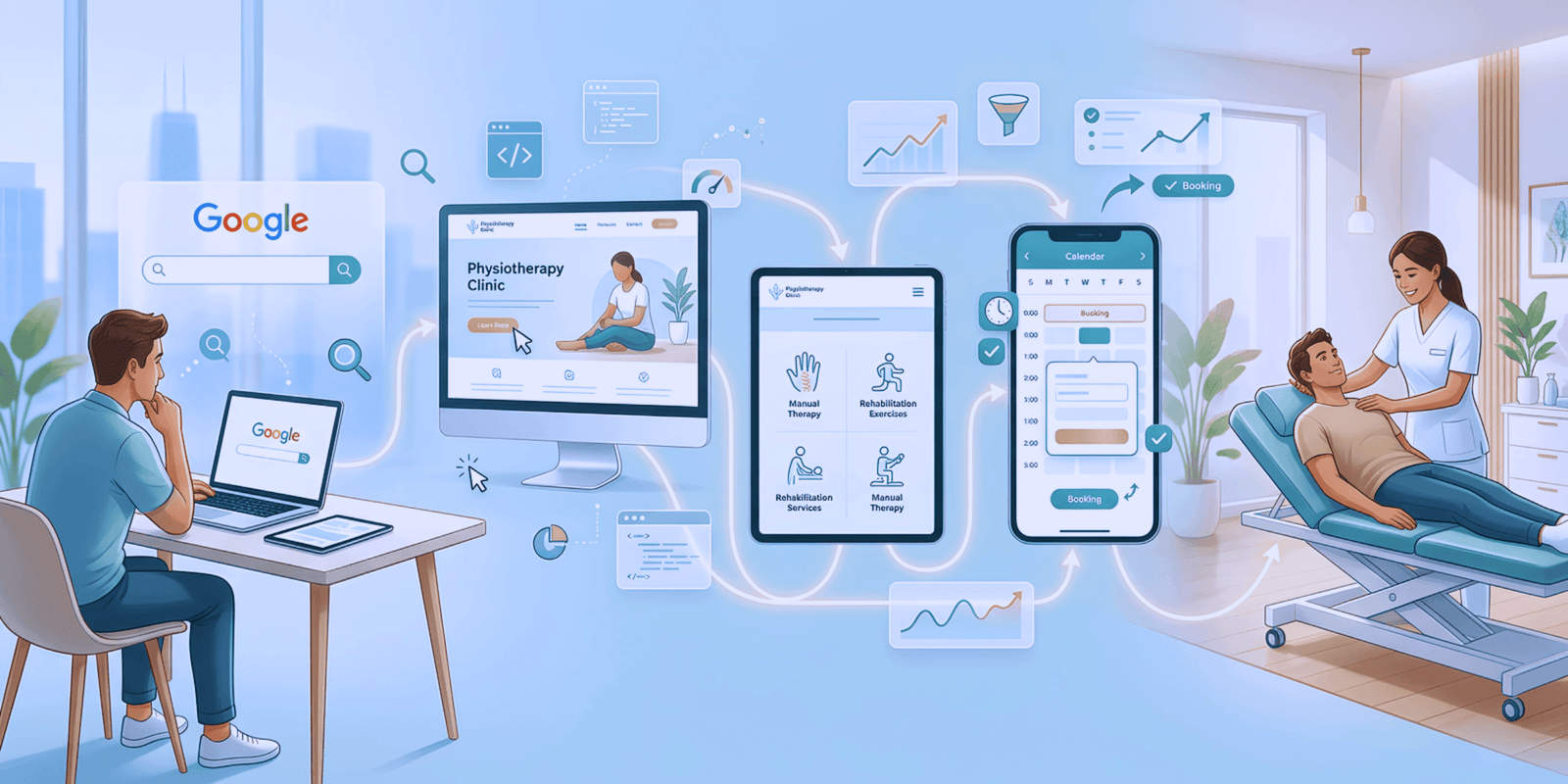
Booking Platforms vs Your Own Website: Which Should Your Clinic Prioritise?

Attracting new patients online is essential for modern medical practices, yet many clinic owners face a common dilemma: should you rely on third-party directories or invest in your own digital home? While healthcare booking platforms can help new patients quickly discover your services, they can also bring ongoing fees and dependence on external channels. The right choice depends on your budget, clinic size, and long-term patient acquisition goals.
Table of contents
How do healthcare booking platforms work?
Third-party healthcare directories and booking platforms: such as Healthengine and HotDoc – act as search engines that connect patients with local healthcare providers to book appointments online.
These platforms operate on high-traffic marketplaces, which can rapidly improve your clinic’s visibility, especially if you are a newly established practice without an existing patient base. However, subscription fees, per-booking charges, and available features vary significantly by provider.
Furthermore, operating on a third-party marketplace means your clinic has less control over branding, patient communication, and the user journey than it would through an owned asset. Before committing to a contract, always review each platform’s pricing structure, lock-in terms, and policies regarding access to patient data.
Booking platforms vs Your own website: Key Differences
To make an informed healthcare marketing decision, it helps to weigh the immediate reach of directories against the long-term equity of an owned website.
| Feature / factor | Third-party booking platforms | Your own clinic website |
| Patient discovery | Immediate access to high-intent patients actively searching the platform. | Relies on Google Search, Local SEO, and paid ads to drive traffic. |
| Competition | High—your clinic appears directly alongside local competitors. | Exclusive- patients focus solely on your practitioners and services. |
| Brand Control | Limited to standardised templates and platform rules. | 100% control over design, messaging, service pages, and booking flow. |
| Cost Structure | Ongoing monthly subscriptions and/or per-patient booking fees. | Upfront web development and ongoing SEO/maintenance investments. |
| Long-Term Value | Rented visibility; traffic stops if you cancel your subscription. | Owned digital asset that compounds in value over time. |
The power of owned media and local SEO
Your own website gives you complete authority over your brand identity, detailed treatment information, and the patient booking experience. When paired with a strong local SEO strategy (including an optimised Google Business Profile), your website helps nearby patients discover your clinic organically when searching for specific treatments on Google. Although building organic search rankings takes time, a high-performing website establishes a sustainable online presence that you own outright.
Key takeaway: Effective healthcare marketing means evaluating both options based on actual bookings, new patient retention, and Cost Per Acquisition (CPA)—rather than looking at website clicks or profile views alone.
Which channel should your clinic prioritise?
There is no one-size-fits-all answer. Your ideal channel mix will evolve as your practice matures:
- New clinics (0–12 Months): Use reputable booking platforms to generate immediate visibility and fill practitioner calendars quickly, while simultaneously building a fast, mobile-friendly website in the background.
- Growing clinics: Track and compare your Cost Per New Patient across all channels. Shift your marketing budget toward the platforms or organic campaigns delivering the highest return on investment (ROI).
- Established clinics: Double down on your website, content marketing, and Local SEO. Strengthening your organic search presence allows you to capture high-intent patients directly and gradually reduce reliance on costly third-party platforms.
You do not necessarily need to choose one channel exclusively. Start with one or two core priorities, measure your conversion performance closely, and expand your digital footprint when the data justifies it.
Invest in channels that deliver sustainable results
Navigating the balance between paid directories and organic search requires a clear, data-driven roadmap. A specialised healthcare marketing agency like BRANDCOM can help audit your current patient booking journey, optimise your website for Local SEO, and develop a tailored strategy to attract more patients and support sustainable practice growth.
Ready to lower your patient acquisition costs and grow your clinic? Contact BRANDCOM today for a comprehensive review of your clinic’s digital presence.